
Author

trinity

Browsing

The kitchen is the heart of the home, but it’s also a major contributor to plastic waste that harms both our environment and our health. Plastics like wraps and ziploc bags often contain harmful chemicals such as BPA and phthalates, which can leach into our food.

These single-use items often end up in landfills, where they persist for centuries, polluting our water, soil and air.

By making simple, sustainable swaps, you can transform your kitchen into a haven of eco-friendly living, protecting your family’s health and reducing your home’s carbon footprint. To get started, look no further than your local shops for eco- friendly alternatives.

Wrap It Up
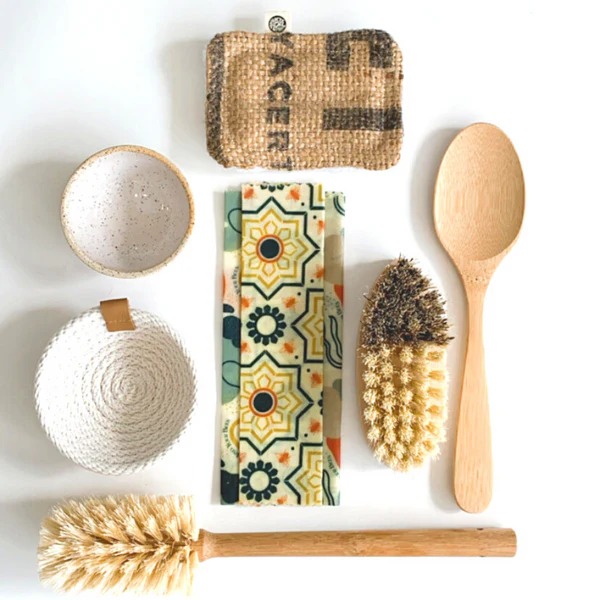
“Beeswax wraps completely replace [plastic] wrap,” says Laura Newton, founder of The Kind Matter Company in Oakville and Milton. Unlike plastic wrap, which traps moisture inside and produces a slimy texture on food, beeswax wraps mimic the skin of a fruit. “They allow air in, but also allow moisture out,” says Newton.

Beeswax wraps are reusable, compostable and durable. Christine Kempf, co-founder of Mrs. Greenway in Dundas, says that with proper maintenance, beeswax wraps can be reused around 500 times. Beeswax melts when it’s warmed, so it’s advisable to wash in cold water. “You don’t want to wash it in hot water, and never use it on a container of hot chicken,” Kempf says. “It needs to cool down first before covering up.

Litterless Lunch
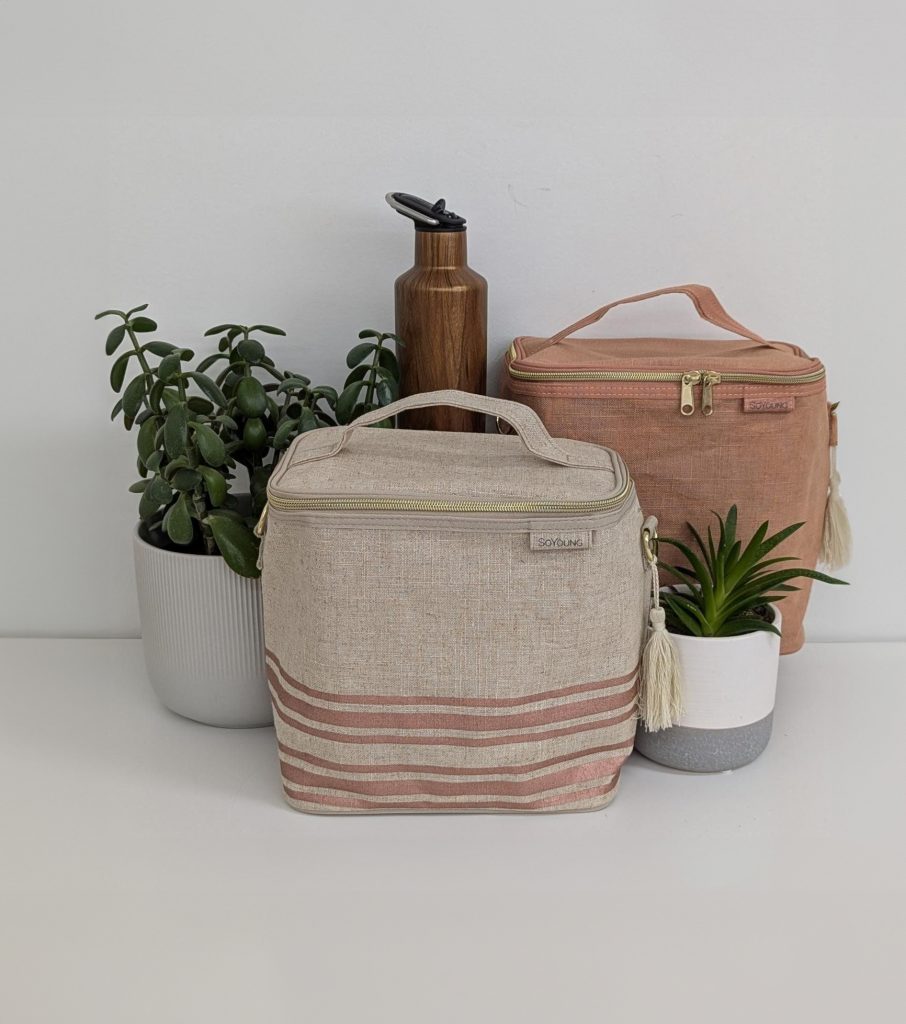
Ziploc baggies may make packing school snacks easy, but these single- use plastics contribute to environmental waste and possible health risks associated with plastic use. Colibri bags are reusable fabric pouches that make packing litterless lunches easy, as they can be washed and reused. Plus, they have dozens of adorable prints kids love. “As long as you take care of it, it will replace hundreds of boxes of ziploc bags,” says Kempf.

Food Storage

Plastic food storage containers can absorb the flavours, odours and colours of food over time, and may leach harmful chemicals into your food as they break down. Stainless steel containers are a durable, eco-friendly alternative. Although they require a higher initial investment, Newton says they ultimately cost less than having to constantly replace plastic containers. “They’re going to last you a lifetime,” she says.

Stasher bags are another great eco-friendly food storage alternative. Made with 100% food-grade silicone, they come in a variety of sizes, including bowls that open wide enough to eat directly from. These reusable, leakproof and air tight containers keep food fresh longer, can be put in the freezer and even washed in the dishwasher. Plus, they’re incredibly long lasting! “Some of my Stasher bags I’ve had for probably seven years,” says Kempf.

Refills

Refilling dish soap and cleaning solution is a simple and effective way to eliminate plastic containers from your kitchen. You don’t need to invest in fancy glass jars right away, although they do look nice. Both Mrs. Greenway and The Kind Matter Company will refill any container, even your old Palmolive bottle. “The most sustainable thing is the one you already have,” says Newton. “If you have a container that is working properly that happens to be plastic, use it until the last moment, then you can upgrade to a glass or aluminum bottle,” she advises.

Refilling also offers cost savings, as you’re not paying for new bottles, pumps or labels. While the eco-friendly dish soaps offered at The Kind Matter Company and Mrs. Greenway may be more expensive than conventional grocery stores brands, these premium products are more concentrated, meaning you use less each time, and you can rest assured knowing you’re using a quality product. “You’re keeping plastic out of the waste system, but you’re also keeping other chemicals out of the water and it’s better for your own health,” says Kempf.

By making these four simple swaps, you can significantly reduce plastic in your kitchen and contribute to a healthier planet, and a healthier you!

Local Links

The Kind Matter Company
282b Kerr St, Oakville
15 Martin St #6, Milton
thekindmattercompany.com

Liquid Earth
603 Michigan Dr Unit 1, Oakville
theliquidearth.com

Mrs. Greenway
2 King Street West Unit # 3, Dundas
mrsgreenway.ca

Nature’s Emporium
2180 Itabashi Way, Burlington
210 North Service Rd W, Oakville
naturesemporium.com


By Lisa Evans

In today’s eco-conscious culture, the thought of turning a fallen or removed tree from your yard into furniture might cross your mind. Not only does it reduce waste, but it also offers the chance to take on a rewarding DIY project. The result is a unique, sentimental piece that preserves the memories tied to your property for years to come.

While the romantic idea of taking something that has naturally come to an end and giving it new life holds true, the reality of a project like this is rooted in the condition of the tree.

“What looks fine on the outside might not be fine on the inside due to rot, fall fractures, or pests,” says Chris Marshall, Customer Service Manager at Exotic Woods.

“If a tree is removed before it’s completely dead, there is usually something salvageable,” adds Rick Veenstra, Inside Sales at Exotic Woods.

Here’s what woodworking enthusiasts should keep in mind to balance the emotional value and practicality of repurposing a tree into home décor.

Endless possibilities

Tap into your creativity with these out-of-the-box ideas for reusing different parts of a tree: create natural wood wall art using the bark and branches, design a tree trunk vanity with the stump as the base, craft a wood slab headboard, or use branches to make original lighting that adds an earthy vibe to your home. Many traditional options will give your tree a functional purpose.

“A tree can be made into cabinet doorknobs, charcuterie boards, jewellery boxes, or larger items like chairs, dressers, and dining tables,” explains Steve Culumovic, Owner-Operator of Blue Skies Custom Woodwork. “What you can make is only limited by the size and quality of the tree.”

Trust the process

When someone contacts a professional to discuss a piece of wood they’d like transformed, aside from determining the condition, there are several other factors to consider. “The main thing to look for is how dry it appears,” says Umar Ahmed, Owner of Tabulo Furniture. “We always discuss the concept and determine how the piece will look and feel in the customer’s space. Everything else like stains, finishes, and details flows from there.”

“At Exotic Woods, we ask questions regarding plans, budget, and timeline,” explains Marshall. “Our concerns are finding any embedded foreign material like stones or metal that could potentially harm our staff or equipment, and we give an honest answer about what will and won’t work for our clients’ projects. We understand that many of these trees hold deep meaning for people for various reasons.”

When deciding if this is the route for you, “Remember there are always cost and time factors involved,” adds Veenstra. “When done properly, air drying is the most economical, but for every inch of thickness you’re looking at one to one and a half years of drying.”

“A tree can be made into cabinet doorknobs, charcuterie boards, jewellery boxes, or larger items like chairs, dressers, and dining tables.”

STEVE CULUMOVIC,
Blue Skies Custom Woodwork

What’s trending now

The aesthetic of rustic wood in home décor has remained popular throughout 2024, emphasizing the trend of bringing outdoor elements indoors and investing in sustainable craftsmanship.

“We’re increasingly seeing clients tired of live edge tables and wanting pieces that have more character, workmanship, and are like works of art,” says Ahmed. In addition to the well-known trends of using live edge and white oak for custom furniture, Culumovic explains, “I can say I’ve had a lot of furniture repair or repurposing inquiries, which I’m also happy to do!”

Local Links

Blue Skies Custom Woodwork
Burlington
blueskiescustomwoodwork.com

Exotic Woods
Burlington
exotic-woods.com

Tabulo Furniture
Oakville
tabulofurniture.com

Finished Grain Woodworks
Dundas
finishedgrainwoodworks.com

By Nicole Hilton

Autumn here we come. Falling for Burlington Downtown is Back!

The Burlington Downtown Business Association (BDBA) proudly welcomes Burlington residents and  visitors to a day full of autumn fun. The changing of the seasons is truly a magical thing to see, and the BDBA is inviting you to enjoy it all! 

Residents and visitors alike are welcomed into Burlington Downtown for a magical, captivating, and  interactive fall experience. Falling for autumn has never been so easy as you enjoy a day filled with fun for all ages, treats & sweets,  drinks & bites and so much more. 

The FREE fall fun and activities at our annual downtown event is a day of self-led exploration in your  own backyard. Take in delicious pizza along Promenade West. Enjoy some nibbles and crafts in  Promenade East. Play games and snap some Instagram worthy pics in Civic Square! Enjoy seasonal treats  and sweets along Brant Street & in Village Square.

Have you had your first PSL yet this season (I mean, come on Pumpkin Spice Lattes are delish!)? Have you picked up that oh-so-cozy fleece sweater that just screams comfy? Ready to enjoy that satisfying  hearty fall meal on a crisp autumn night? Burlington Downtown has you covered! As you take in the  sights of the season, make sure to take in all our downtown business community has to offer. 

Shop, dine, sip and everything in between as you visit over 400 small businesses that proudly call downtown home.

New this year is the BDBA’s sensory zone! This special place offers visitors a break from the day’s  activities with calming lighting, lowered sounds and multi-sensory relaxation activities. Need a hand  while visiting the sensory zone? Our event staff has you covered, we’re here to help!

Falling for Burlington Downtown takes place Saturday October 5th, 4h from 12pm to 4pm.

A full list of event  activities, times & participating businesses is available at:
burlingtondowntown.ca/falling2024

Come out & support local!

You plan a perfectly portioned meal, offering a rainbow of foods to nourish your growing child, yet when they sit at the table it’s like a veggie eviction. The carrots get sidelined, followed by a dramatic “yuck” or even a fake gag at the broccoli.

The veggie showdown can be especially frustrating for parents. We know those colourful foods are full of vitamins and minerals that are critical for growing bodies, so how can we pack them into our picky little eaters?

It may help to know that this aversion to veggies is developmentally normal. “We have an innate affinity to sweet foods, beginning from as early as in utero,” says Norine Khalil, Registered Dietitian at One Elephant Integrative Health Team in Oakville. “Breast milk and formula are sweet, so we are exposed to sweet flavours from so early on that our taste buds may just enjoy these more in comparison to more bitter tasting vegetables.”

The good news is most kids do grow out of this distaste for veggies as they become less sensitive to flavours. Try these tips to encourage a love for vegetables at an early age.

Offer Choice and Variety

“For some kids, the idea of trying something new can be scary,” says Amy Pulford, Director of Little Kitchen Academy in Oakville. Giving kids control over their food can help them be more adventurous. Visiting a farmer’s market or grocery store and inviting your child to choose a new vegetable to try gives them control over their food choices, and you both might be surprised by what you discover!

Involve Kids in Food Prep

Making kids part of the process of preparing food can make them more likely to try it. Depending on their age, meal prep involvement may be as simple as helping to crack an egg, collecting ingredients from the fridge or pressing the button on the blender.“At Little Kitchen Academy, we encourage our students to plant, nurture and harvest some of our produce in our outdoor garden because we know that when we are an active participant in our food choices, we will try them – and more often than not, enjoy them,” says Pulford.

Talk About Preferences

When your child says “yuck” and pushes veggies off their plate, rather than trying to convince them to eat it, Pulford says this is a great moment to explore what they don’t like about the food.

“Perhaps your child has always said that they don’t like tomatoes, but through talking about what they don’t like – the texture, taste – you may discover that they in fact do like tomatoes prepared in a different way, such as grilled versus raw or cut versus whole,” she says.

Avoid Hidden Vegetables

You may think you’re being sneaky by packing blended veggies into your child’s pasta sauce, but Khalil says this strategy can backfire as kids miss out on the opportunity to get used to the actual look, texture and taste of vegetables.

Instead, she recommends presenting vegetables in a variety of ways – roasting, steaming, air frying or pairing with a yummy dip such as hummus or guacamole. “Exposure to the texture is a huge part of getting kids comfortable with vegetables, and we often will skip this due to frustration,” she says.

Make Veggies Fun

Rather than dumping a spoonful of broccoli onto your child’s dinner plate, get creative with making veggie faces on pizza or cutting veggies into fun shapes.

Offer Without Pressure

“It can take over 10 exposures for a child to even consider trying a new food”, says Khalil. Developing a taste for vegetables can take time.

Add veggies to their lunch along with foods they typically enjoy and avoid calling attention to whether they eat it or not.

By openly incorporating vegetables into meals and encouraging a positive attitude towards them, you can win the veggie wars and develop lifelong healthy eating habits, too!

Broccoli Pesto Pasta

INGREDIENTS

  • 100 g broccoli
  • 55 g dried spaghetti
  • 14 g unsalted butter
  • 1 tbsp olive oil
  • 35 g yellow onion
  • 1 garlic clove
  • 1/2 tsp table salt
  • 1/4 tsp pepper
  • Pinch red pepper flakes (optional)
  • 2 tbsp heavy cream
  • 28 g parmesan, grated

METHOD

  1. Bring a pot of water to a boil and cook broccoli for 2-3 minutes to blanch. Drain broccoli and transfer to a bowl of ice water to shock.
  2. Once broccoli has cooled, chop into small pieces.
  3. In a frying pan, melt the butter and the olive oil. Add the onions and cook until translucent.
  4. Add the garlic, broccoli, salt, pepper and red pepper flakes to the frying pan and cook.
  5. Pour the cream into the frying pan and cook to slightly thicken. Remove from heat and set aside to cool.
  6. Cook the pasta in boiling water. Reserve 1/4 to 1/2 cup pasta water to thin sauce.
  7. Place the broccoli mixture in a blender and blend until almost smooth (a few chunks are desired). If too thick or dry add 1 tbsp pasta water at a time to thin down sauce.
  8. Toss the pasta in the broccoli sauce and parmesan cheese.
  9. Serve with more parmesan cheese if desired.

Recipe provided by Little Kitchen Academy
(905) 845-5355
littlekitchenacademy.com

By Lisa Evans

Wellness check: how are you coping in the aftermath of the worldwide pandemic? Although 2020 seems like a lifetime ago, the ripple effects of Covid 19 linger as many people struggle with mental health and addiction issues. Huge complications such as the economic downturn, increased food insecurity and the housing crisis have converged to create a perfect storm affecting our friends, family members and neighbours.

I’m an example of this. Normally an extroverted, friendly person who strives to be the life of the party, since the pandemic I feel anxiety when in large social situations. Furthermore, I haven’t ventured onto a plane in five years (but hope to soon)! I’ve also noticed that my alcohol consumption has risen while my fitness level has declined. And I know that I’m not alone.

Raising awareness, lessening stigma, and increasing access to services are crucial. Equilibrium Burlington’s 4th Annual Walk to the Lighthouse For Mental Health and Addictions on Sunday, September 22 aims to do just that.

The walk supports Joseph Brant Hospital Foundation’s (JBH) For All Minds campaign, which seeks to raise $20 million to expand its Mental Health and Addictions Department.

The goal of the campaign includes relocation and expansion of the In-patient Mental Health and Addictions Unit, the addition of a psychiatric intensive care unit, relocation of the Outpatient Mental Health Unit, and a new Child and Youth Mental Health Day Hospital.

Melanie Walker, the Intake Coordinator for Out-Patient Mental Health at JBH, co-chairs the Walk to the Lighthouse Committee, aided by people with lived experience. As suggested by the committee, registration is free, enabling everyone to participate.

As Intake Coordinator, Walker’s role is to review referrals and determine the starting point for people needing services. This could include a referral to programs such as psychiatric consult, concurrent disorders, first episode psychosis or Dialectical Behavioural Therapy.

She notes an influx of referrals due to the pandemic, numbering 5,000 a year. Youth, adolescents, and new mothers in particular are struggling, and new programs will respond to their needs.

AN IMPORTANT CAUSE

A December 2023 study, “Understanding the Mental Health of Canadians Through Covid 19 and Beyond, Poll #18” by Mental Health Research Canada reports that one in three Canadians have been diagnosed with anxiety or depression since the onset of the pandemic. Anxiety and depression levels are 57% and 33% higher than pre-pandemic.

One in seven Canadians (15%) reported accessing mental health services in the last year, although finding help can be problematic. When asked why they didn’t access mental health care, 31% didn’t know where to get help, and 20% said wait times were too long. Twenty percent couldn’t afford services, and 21% reported access to care was limited.

Walk to the Lighthouse For Mental Health and Addictions on Sunday, September 22 supports Joseph Brant Hospital Foundation’s (JBH) For All Minds campaign, which seeks to raise $20 million to expand its Mental Health and Addictions Department.

The For All Minds campaign aims to redefine mental health services and update the unit. “The expansion is needed because the services are presently spread out in the hospital,” Walker says. “People deserve to be in a safe and healing environment. The aim of the walk is to raise awareness of the services and to let people know we are here and we have the resources if they reach out.”

Last year’s walk was an outstanding success with 300 people of all ages and stages participating, including a woman who used a walker to complete the 5K circuit. A total of $53,000 was raised!

Getting involved in Walk to the Lighthouse helps those with lived experience make a difference while helping others and themselves. “It is the best feeling when we walk in unity with no shame and no stigma,” Walker says. “People stop to ask why we are walking, and those walking are open about it. This is a day of hope to tell people that they aren’t alone and that there are services and people do care.”

The event starts at the JBH parking lot and participants walk 5K to the lighthouse and back.

Find out more, and register to walk or donate here walktothelighthouse2024.funraise.org

By CYNDI INGLE

Exercise, brain food, and good quality sleep are proven essentials to keeping our minds sharp. But have you ever considered that one of the simplest, most rewarding ways to enhance brain health is by learning a new language?

As I read more about the significant benefits of bilingualism, I’m kicking myself for not learning a second language when I was younger. I took beginner Spanish as an elective in University and planned to immerse myself in the culture, perfecting my Spanish as I traveled across South America. Sadly, the trip got sidelined by life and linguistically, I never advanced much past, “Cerveza, por favor.”

So, here I am decades later, a regretful monolinguist. But all is not lost. While our brains may become less receptive to new languages as we age, it’s absolutely possible to learn later in life.

The perks of picking up a new language are just too appealing to ignore. Studies show that being multilingual can enhance memory, extend our attention span, and even delay the onset of dementia.

Bilingual people tend to have better cognitive skills than monolinguals. This is called the “Bilingual Advantage.” This advantage includes superior problem-solving abilities and enhanced creativity. As a monolinguist, I’m left to wonder what artistic masterpieces I might have created if I hadn’t dropped high school French in grade eleven.

I just read that bilingualism is linked to increased grey matter density in the brain, which correlates with better memory and cognitive function. The science connecting language learning and brain health is compelling. A study from the University of Edinburgh found that bilingualism could delay Alzheimer’s disease onset by up to five years.

That finding alone has me searching for my old Spanish textbook. Another study from York University in Toronto discovered that bilingual people tend to have more efficient brain networks. Hmmm, this could explain why I can’t remember where any of my old textbooks are.

Kidding aside, learning a language at any age is so good for us. The cognitive workout required to learn and practice a new language increases the neuroplasticity of our brains and can delay cognitive decline.

Celina Gutierrez, founder of Speak Spanish Academy in Oakville, says that students learning Spanish not only sharpen their memories but also build multicultural networks and advance academically and professionally. “Learning a second language not only enhances brain development and boosts our attention, but understanding a new culture through language enriches our world view,” Gutierrez says.

Fern Hill School in Burlington teaches Mandarin to students from preschool to Grade 7. This early exposure helps students master Mandarin’s unique tonal sounds, which differ significantly from English and French and are more challenging to learn later in life.

SCIENCE SAYS

As people live longer, the world population is more at risk of cognitive decline, a natural consequence of aging. Studies show that learning a foreign language may be an effective non-pharmacological way to protect our brains from decline.

Learning a new language can…

  • promote thinking skills
  • increase mental agility
  • delay the aging of the brain

A study funded by the National Institutes of Health also found that bilinguals are better at multitasking.

For anyone who’s ready to learn a language and explore a new culture in the process, there are plenty of in-person and online options:

LANGUAGE SCHOOLS: Schools like Alliance Française, German School Halton, My French Club, and Speak Spanish Academy provide specialized instruction, often using native speakers and immersive teaching methods.

ONLINE PLATFORMS: Duolingo, Babbel, and Rosetta Stone are convenient and go at your own pace with interactive lessons and community forums to enhance the experience.

LANGUAGE TUTORS: Private tutors, online or in-person, provide a supportive environment for learning, practice, and improvement.

Learning a new language offers so much more than just communication skills – it’s fun and très très bon for the brain. Whatever language you decide to learn, the rewards are significant. Why not enroll in a local program and take the linguistic leap?

By Lisa Thornbury

Local Links:

Speak Spanish Academy
speakspanishacademy.com

My French Club
myfrenchclub.ca

Alliance Francaise, Oakville campus
alliance-francaise.ca/en/who/contactus/oakville-campus

German School Halton
germanschoolhalton.ca

As summer fades and the back-toschool hustle begins, I’m emerging with a hefty dose of mom guilt. Despite my best intentions of running “Camp Mom” this summer, reality quickly set in. Late bedtimes, endless snacks, and far too much screen time led my kids into a spiral of dysregulation.

As a mom of three – two of whom are neurodivergent – I understand how daunting it can be to navigate the world of “fun” when inclusive spaces are often out of reach. Finding activities where all children can thrive and be themselves is more than a luxury. It’s a necessity.

In preparation for our next rainy day, I’ve done a deep dive and discovered some fantastic local programs designed with accessibility and inclusivity at their core. The following rec and culture facilities offer enriching experiences that are tailored to children’s unique needs.

Here are some of my favourites:

Triple C Farm
500 Carluke Road West, Ancaster
Triplecfarm.ca

Triple C Farm is a haven for those seeking joy and connection. Founded by Tricia and Pascal in 2013, the farm has grown into a vibrant sanctuary for both animals and people with diverse needs, including their three autistic sons. Home to goats, alpacas, bunnies, and more, Triple C Farm offers interactive experiences such as baby goat yoga and a massive petting zoo. To further foster a sense of community, Tricia and Pascal have established a volunteer program for disabled adults.

We Rock the Spectrum – Oakville
245 Wyecroft Road, Unit #3, Oakville
werockthespectrumoakville.ca

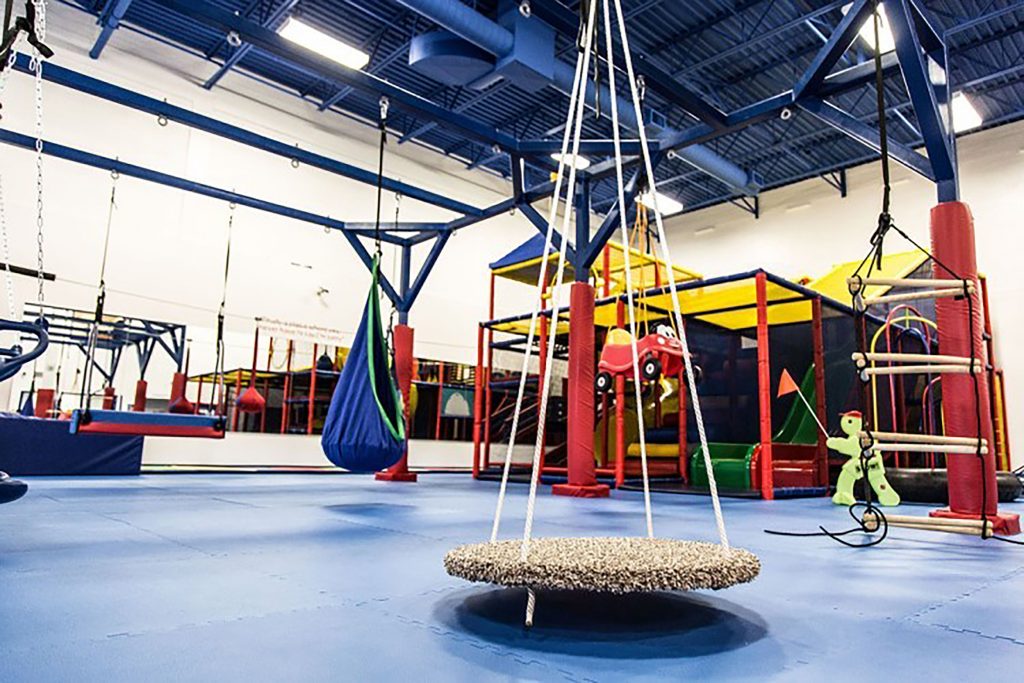
Personally vetted and adored by my very own kids, We Rock the Spectrum offers an extraordinary range of fun for children of all abilities. This sensory-safe gym creates a nurturing environment designed for learning, exploration, and sensory-friendly experiences.

What sets this play centre apart is its unique equipment, including a mini-zipline, play structure, multiple therapy swings, a rock-climbing wall, monkey bars, and a calming room for moments of overstimulation. It’s a space where children can feel at ease and truly be themselves. Whether you’re dropping in for open play, joining one of their engaging classes, or booking a party, We Rock the Spectrum provides a vibrant and inclusive experience for all.

Challenger Baseball
Oakville, Burlington & surrounding cities
Baseball.ca/challenger-baseball

Challenger Baseball is an adaptive baseball program that empowers children, youth, and adults with physical and/or cognitive disabilities. The program teaches core life skills inherent to baseball, such as teamwork and determination, in a supportive and inclusive environment. Each player is paired with an able-bodied “buddy” who assists them one-on-one, ensuring they can fully participate. In the true spirit of the game, Challenger Baseball brings joy to every participant.

Westdale Theatre
1014 King Street West, Hamilton
Thewestdale.ca

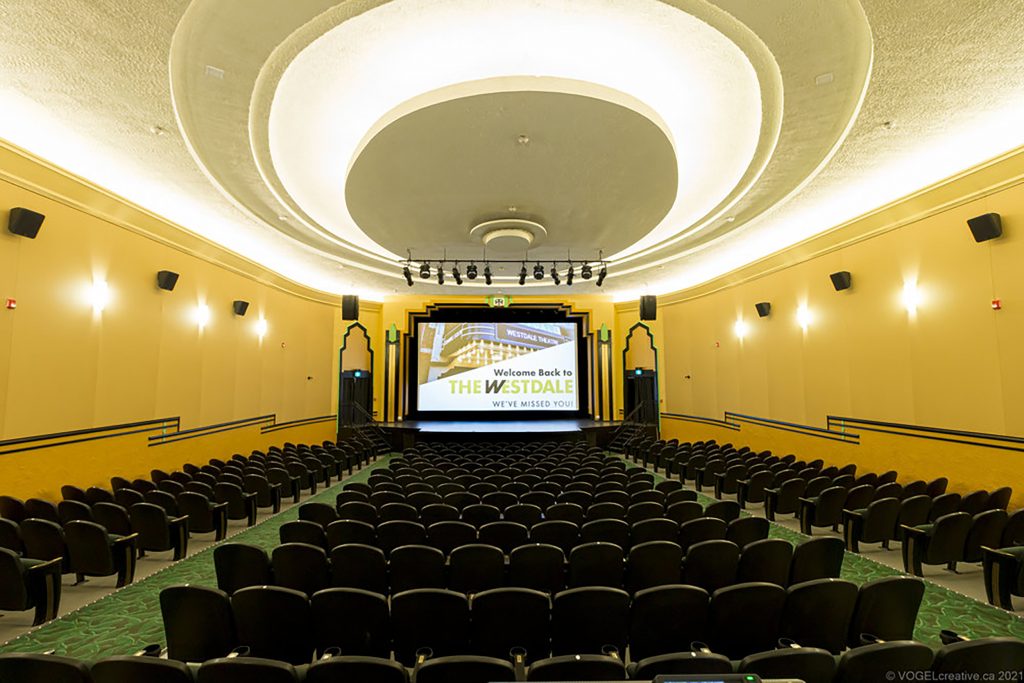
For many neurodivergent individuals and families, catching a matinee can be more challenging than it seems. Traditional movie theatres are often filled with sensory triggers like flashing lights and loud noises. For parents of children who struggle with staying still or speaking softly, it can be daunting to worry about disrupting others’ experiences.

Once a month, Westdale Theatre offers a sensory-friendly screening designed to address these concerns. Special showings feature open captioning, dimmed lights, reduced sound levels, and the absence of advertisements or trailers. Moviegoers are encouraged to move around and make themselves comfortable. While the program was initially developed for individuals on the autism spectrum, it is open to anyone who benefits from a lower-sensory environment.

The Dance Ability Movement
Milton & Mississauga
Danceabilitymovement.com

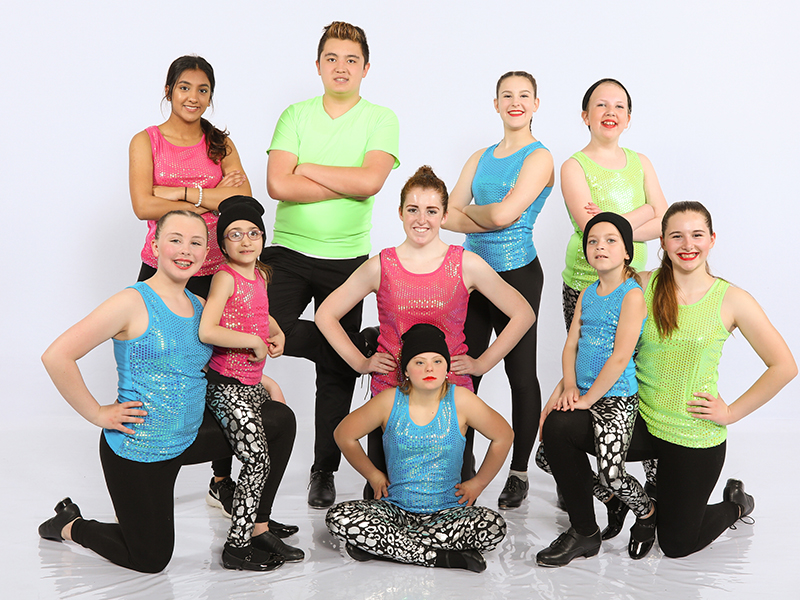
If you’re searching for a dance world without limits, the Dance Ability Movement is it! Founded by sisters Mallory and Jade Ryan, this innovative, community-driven initiative unites a dynamic team of occupational therapists, dance instructors, and other skilled professionals to offer an inclusive, exhilarating dance experience. Participants can explore a range of dance styles, from ballet and jazz to hip-hop and tap. Instructors are specially trained by The Dance Ability Movement to adapt their teaching methods and class structure to meet each student’s needs, ensuring a supportive and engaging environment.

These programs are just a glimpse into the fantastic local initiatives designed to support our children and families. While finding the perfect fit can take time, knowing these resources are available makes the journey a lot smoother.

By Annelise Lawton

“Once someone learns to dance there’s no turning back. It stays with you for a lifetime.” – Lucy Karakas, Lucille’s Ball, Burlington

You’ve heard the music on beaches, seen twirling skirts on park pavilions. From Niagara to Toronto there’s a whole community of people who know how to have a good time. It’s impossible not to smile when you waltz or bachata, because nothing says unadulterated joy like dancing in perfect rhythm with other happy souls.

Everyone needs human connection. The psychological and physical effects are so significant, scientists say that social contact can boost life expectancy. Dancing instantly provides these benefits. For couples, moving in unison to music reignites romance every time. For singles, an evening of dance is the ultimate feel-good indulgence. 

The workout isn’t just physical, it’s cerebral and improves coordination. “Dancing improves your brain health by getting you out of your left brain thinking and into your body,” says Lucy Karakas, owner of Lucille’s Ball dance studio in Burlington.

Karakas teaches many styles of couples dance. “Ballroom is more structured and gives an impression of gliding along the floor,” she says. “Latin has more hip movements, spins, arm movements. It requires more coordination and takes a bit longer to master, but you’ll have fun right away when you start learning.”

Every style is great for morale and self-confidence. Dancers learn how to move gracefully and stand with perfect posture. They have a built-in social outlet and are a well-dressed, energetic breed. “Once someone learns to dance there’s no turning back,” Karakas says. “It stays with you for a lifetime.”

GIVE IT A WHIRL

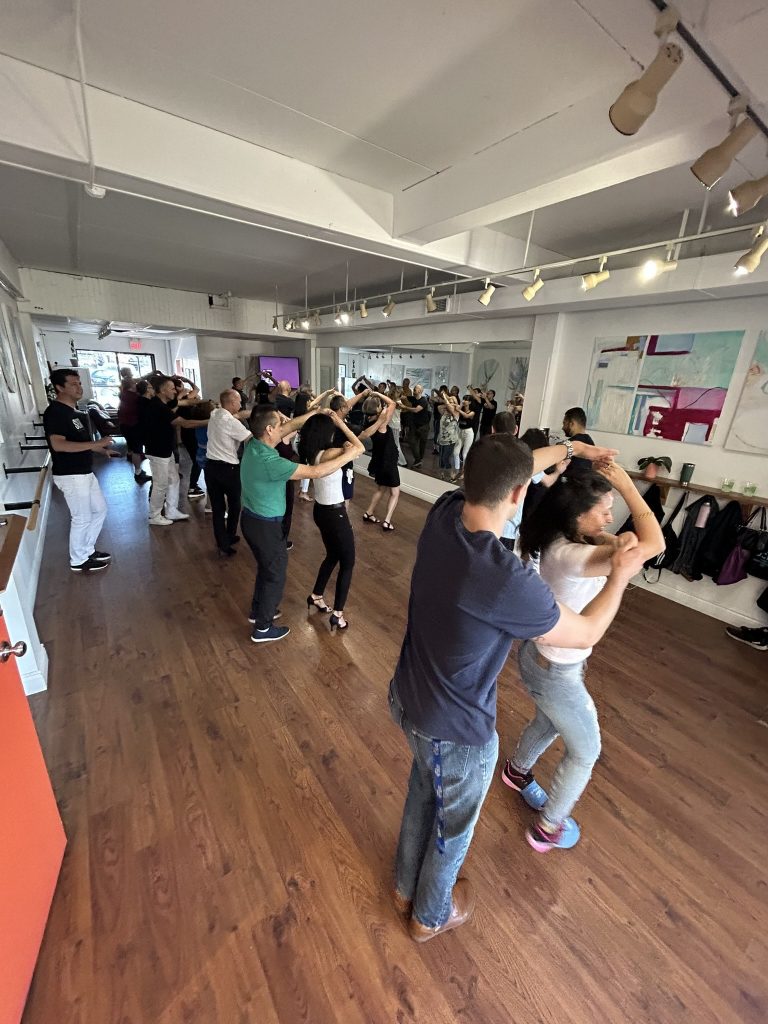
Latin music has always been integral to the ambiance at Taste of Colombia Fair Trade Coffee in Bronte. By popular demand from clients, the cafe began hosting dance lessons and socials twelve years ago and expanded to add a dance floor, El Salon. “Salsa Night in Oakville” became an established event that happens every Saturday from 6 to 11 p.m. No previous experience is required, and attendees can show up with or without a partner.

“It’s less intimidating than a club,” says Yury We-Parra, founder of Taste of Colombia. “Movement through dance is very healing.

“Salsa dancing, as a form of physical conversation, fosters deep connections between people,” says Melanie Gillis, Founder of Studio-G Dance in Hamilton, which is both a dance school and a gorgeous venue for a night of social dancing.

Gillis started frequenting Latin clubs several years ago and immersed herself in the vibrant and growing community. “We are lucky to have so many great spots where we can dance and make friends in this area,” she says. “I feel blessed to be part of it all!”

PICK YOUR PASSION

There are dances for all tastes, personalities, and fitness levels. Swing and Lindy Hop involve playfully bopping to fast-paced, swingin’ tunes, typically from the hot jazz and big band eras. Ballroom dances like the waltz, cha cha and fox trot feature elegant, timeless moves to a range of classical or jazzy music. Latin dances involve more improvisational hip motions and foot work, to rhythmic roots music of various origins.

And then there’s Argentine tango. “Passionate, romantic and intense” is how Miguel Coppini, maestro de tango argentino and owner of Miguel y Michelle Tango, describes it. “A couples dance steeped in the culture, Argentine tango originated in Buenos Aires and features a close but flexible embrace, basic steps, figures and patterns.”

The term “Argentine tango” also refers to a musical repertoire spanning many eras, even back to the early 1900s. It’s commonly described as something you feel in the heart, not just in the feet.

To observers, tango is lovely to watch. And the outfits! In classes and workshops anything goes – dance shoes with smooth soles being the only requirement – but at milongas (dance parties), women wear heels up to 11 cm high and sexy, unique designs.

“Skirts, dresses and flowing pants allow and show off the follower’s leg movements,” Coppini says. “Men usually wear a shirt and dress pants in more casual situations and a full suit if they want to impress. Wearing black is very popular.”

Get off the couch, turn off your devices, and get dolled up. The music’s starting.
By Michelle Morra

Local Dance Lessons & Socials:

ARGENTINE TANGO

Miguel y Michelle Coppini
33 Shepherd Road, Oakville
miguelymichelletango.com

SALSA & BACHATA

Olé to Dance
594 Chartwell Road, Oakville
oletodance.ca

Studio-G Dance Hamilton
126 James Street North, 3rd Floor, Hamilton
studioghamilton.com

Taste of Colombia Fair Trade Coffee
67 Bronte Road, Oakville
tasteofcolombia.ca

SWING

Ancaster (Burlington)
West Coast Swing
3323 Mainway, Burlington
towestcoast.com/ancaster

Steel City Swing
steelcityswingdance.ca

VARIOUS

Boleo, Oakville
284 Church Street, Oakville
boleodancestudio.com

danceScape
2077 Pine Street, Burlington
dancescape.com

Lucille’s Ball Dance Club
4375 Mainway, 2nd Floor,
Burlington
lucillesball.dance

There’s a saying in retail: When you buy from a small business, an actual person does a little happy dance. When customers make a conscious choice to support the local economy instead of spending internationally, the whole community benefits.

With increasing competition from big box retailers offering mass-produced products, it’s more important than ever to source Canadian-made furniture and home décor options. In recent years, retailers have cited a skills gap, competitive pressure from the United States-Mexico-Canada Agreement, and the cost of doing business as main challenges surrounding Canadian made goods.

Retailers have a lot of overhead costs, and the common markup for handmade is not as sustainable as it once was. All the more reason to celebrate and support local businesses that remain committed to offering homegrown products.

One-of-a-kind

Joshua Creek Furniture in Oakville has a 10,000 sq ft showroom with Canadian-made furniture for every room in the home, from sofas and sectionals to solid wood bedrooms, dining rooms, custom home offices and much more.

“Shopping Canadian supports local industry and minimizes your ecological impact,” says Joshua Creek’s Samantha Hobbs. “The bonus? Your Canadian made furniture is built to order, with custom choices that perfectly reflect the home you want to live in.”

The company works with local craftsmen known for superior construction and quality materials. Joshua Creek’s wood products feature details such as solid wood drawer boxes, English dovetailed mitre joints and full extension ball bearing glides. All of their leather furniture is made locally, with 100% top grain leather around the whole piece.

The company works with local craftsmen known for superior construction and quality materials. Joshua Creek’s wood products feature details such as solid wood drawer boxes, English dovetailed mitre joints and full extension ball bearing glides. All of their leather furniture is made locally, with 100% top grain leather around the whole piece.

The local advantage ensures superior customer service. “By using local builders, we are able to service any issues that may arise,” says Joe Levine. “Our builders take care of us, ensuring that we can take care of you.”

Cat McCrimmon, owner of Rustic Daisy’s in Waterdown, finds that customers enjoy discovering unique items they can’t find anywhere else. Her store sells exclusively Canadian-made gifts, home décor, and original art.

“The best example in our shop is pottery mugs made by Studio C Ceramics,” McCrimmon says. “Not only does this maker hand throw each mug on a wheel, but she also individually paints them. Every mug is a little different, allowing the customer to select the one that stands out to them the most.”

Quality first

Anderson Interiors in Burlington specializes in interior decorating, custom furniture and reupholstery, and has a showroom where designers showcase their work. Owner Jim Anderson stresses the Canadian-made financial benefit: “With no hidden costs like duty, shipping, or the dollar exchange from other countries added to the price,” he says, “every dollar spent is going into the quality of each piece.”

Canadian suppliers offer quicker lead times, customizable orders, lower shipping costs, less shipping damages, and more stock readily available. “We don’t have to make a pre-made piece work for your space,” Anderson says. “We can customize any piece to your specific room.”

Elizabeth Law, owner of Burlington-based Elizabeth Interiors, Liz at Home, and Liz at the Lake, can vouch for her merchandise because she visits suppliers and sees their work in progress. “We are very fortunate to have strong relationships with leading furniture manufacturers in Canada,” she says. “The advantage is visiting the [workshop] and seeing the quality [firsthand].”

Something to talk about

The key to sourcing Canadian-made products is communication. One way to get educated is simply by asking. Sales associates and store owners can point consumers in the right direction.

“Some items are designed in Canada but made offshore, so chatting with someone knowledgeable about the product will help,” says McCrimmon.

“Asking questions and comparing quality, price, and service to international brands will educate shoppers,” says Anderson.

“People like purchasing Canadian furniture because they like supporting the local economy,” adds Law. “Our clients feel proud to showcase Canadian artisans in their homes.”

According to Hobbs, customers of Joshua Creek Furniture are proud to say that their homes are full of locally made products. “We appreciate their commitment to our small local business,” she says. “When you buy our Canadian made products, you are purchasing quality pieces that your family will love for years to come.”

Local Links:

Anderson’s Interiors
686 Guelph Line, Burlington
andersonsinteriors.ca

Elizabeth Interiors
3225 Fairview Street, Burlington
elizabethinteriors.com

Joshua Creek Furniture
1029 Speers Road, Oakville
joshuacreekfurniture.com

Liz at Home
3443 Fairview Street, Burlington
elizabethinteriors.com

Penwood Furniture
270 North Service Road West, Oakville
penwoodfurniture.com

Rustic Daisy’s
25 Main Street South, Waterdown
rusticdaisys.ca

The Handmade House
374 Brant Street, Burlington
71 King Street West, Dundas
thehandmadehouseburlington.ca

By Nicole Hilton

The fourth annual Walk to the Lighthouse for Mental Health and Addictions in support of the Joseph Brant Hospital Foundation is on! Mark your calendars for Sunday, September 22nd, rain or shine.

What is the cause all about?

The Walk to the Lighthouse is an annual fundraising event that continues to grow each year in size and donations. Every year, people are suffering with Mental Health in silence and not getting the proper treatment they need due to fear of stigma, isolation and judgement.

The walk is an important event that is dedicated to advocating for change and providing improved programs for Mental Health & Addictions in our community. The walk committee is made up of both individuals and families, with real world experience, living with Mental Health issues, all working towards a brighter future to help the next generations.

Where is the walk?

The walk will depart from the Joseph Brant Hospital parking lot directly beside the Joseph Brant Museum and will make its way down the scenic waterfront trail towards the lighthouse and back.

There will be a limited amount of parking passes available to those who register online and paid parking in many nearby lots. The distance to and from the lighthouse is approximately 5 kilometers and should last about 45 minutes to an hour.

Where do my donations go to?

All donations and proceeds will go directly to the MH&A fund at the Joseph Brant Hospital in support of those in need. Last year, the team was fortunate enough to raise over 50,000 dollars and this year, we hope to match and raise that amount!

Help support the cause by joining your local community for an afternoon walk and work towards breaking the stigma against Mental Health and Addictions within our society.

So…. Who will you walk for?

Contact:
Melanie Walker and Sylvia Phelps: Co Chairs Of The Committee
Instagram: @walktothelighthouse
Info@walktothelighthouse.com
walktothelighthouse2024.funraise.org

By Trinity Paton