Category

Articles

Category

Caribbean cuisine is hot, hot, hot — not only in spice but also in appeal. It’s a fusion of flavours and cultures, reflecting the diverse heritage of the islands. At its core, Caribbean food is a celebration of bold spices, succulent meats, and an abundance of fresh produce.

Jerk chicken is a well-known Caribbean dish that exemplifies the marriage of heat and flavour. The chicken is marinated in a blend of herbs and spices, then slow-cooked until tender and juicy. The result is a dish that packs a punch with every bite, yet still manages to tantalize the taste buds with its rich, smoky flavour.

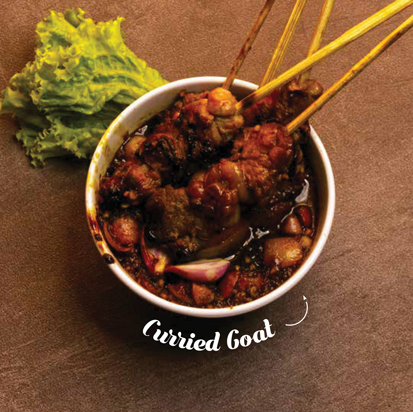
This island cuisine is also about the heartiness of its dishes. Caribbean food is known for its generous portions and rich flavours, from fall-apart tender oxtail stew to savory curried goat. These dishes are often cooked low and slow, allowing the flavours to meld together and the meats to become melt-in-your-mouth tender. It’s the epitome of comfort food. 

And let’s not forget the bread. In the Caribbean, bread is more than just a side dish. Whether it’s johnnycakes, hardo bread, or roti, this staple is as diverse as the islands. Each bread brings a unique texture and taste to the table, perfectly complementing the dish it accompanies.

Kori’s Roti has become a go-to spot in Oakville for Trini food. Owners Chris and Leilani say, “Caribbean food is about finding the perfect balance between heat, spice, and flavour. Every ingredient has its place, and when you get it just right, it’s everything. Quality and authentic ingredients are key. We source locally whenever possible and import directly from Trinidad to make sure we are bringing you the best ingredients.” (Is it just me, or is your mouth watering too? I’ll be taking an early lunch today…)
At Kori’s they also caution, “Our pepper scale ranges from mild to suicide (think red face, steam coming from your ears). So unless you’re used to it, you’re going to want to start slow.”

When you sit down to a meal of Caribbean food, you’re not just eating; you’re experiencing a piece of the chef’s culture. At Burlington’s JustJerk, their mission is to prepare authentic Jamaican food with all the rich spices the chefs grew up with on the island. For the owners, Caribbean food is about tradition and family. It’s about passing down recipes from generation to generation and keeping their culinary heritage alive. 

I fell in love with Caribbean food when I visited my brother who was working in Jamaica. He was immersed in the community and, therefore, the perfect culinary guide. Ackee and saltfish, Johnny cakes and Jerk Chicken became fast favourites that I was delighted to learn I could find at home.

Whether you’re a seasoned foodie or a curious newcomer, exploring the world of Caribbean cuisine is an adventure for the senses. So why not spice up your next meal with a taste of the Caribbean? Your taste buds will thank you. 
FOR A TASTE OF THE ISLANDS VISIT:

Kori’s Roti Shop 
1026 Speers Road, Oakville
korisroti.ca

Irie Cuisine 
121 North Service Road East, Oakville  
iriecuisine.ca

Sunrise Caribbean Restaurant
3513 Wyecroft Road., Oakville

Ranee’s Roti
579 Kerr Street, Oakville

JusJerk Caribbean Restaurant
3300 Fairview Street., Burlington
jusjerk.ca

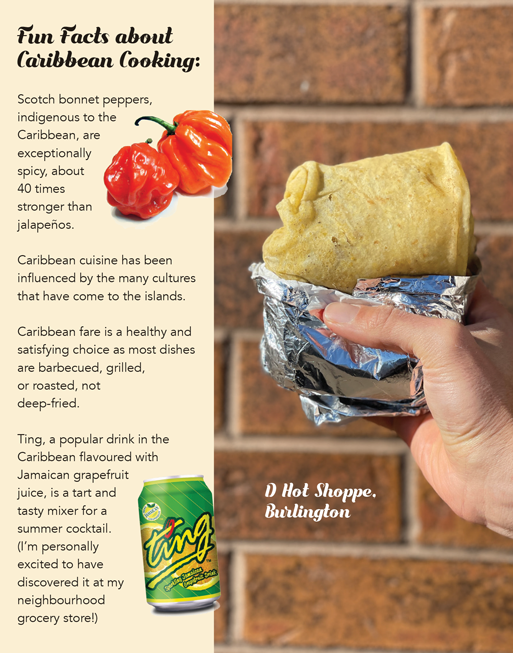
D Hot Shoppe 
4155 Fairview Street, Burlington 
dhotshoppe.com

If the warmer spring weather has you itching to get your trowel into the garden, you aren’t alone. Beautifying our outdoor spaces is a rite of spring passage. While it may seem like there’s nothing more natural than digging around in the dirt in the springtime, creating a sustainable garden goes further by considering factors such as resource conservation (using water, soil and energy efficiently), biodiversity, natural pest control and minimizing the use of disposable products. 

Sustainable gardening focuses on creating and maintaining a garden that minimizes negative environmental impacts and promotes long-term ecological balance.  

“In nature, a landscape would sustain its existence by adapting to the available resources and the climatic conditions it is exposed to,” says Thomas Classen, Propagation Manager of Hortico Nurseries in Waterdown. For a garden to be considered sustainable, it would not rely on constant human intervention to flourish. 

HOW TO GROW A SUSTAINABLE GARDEN

Plant Native Species

Native plant species have evolved with local pollinators and have genetically adapted to local growing conditions. They’re often easy to care for. Compared to non-native species they require less watering and are more resilient, relying less on humans to protect them and help them thrive. Native plants are better able to endure the stress factors of climate. 

Since sourcing native plants can be difficult, especially for inexperienced gardeners, Oakvillegreen holds a Native Plant Sale every year. They offer a selection of native trees and shrubs and ready-to-plant pollinator kits for sunny and shady gardens.

“Since 2015, our sale has added thousands of native trees, shrubs and plants to Oakville gardens,” says Anelia Tichkova, Programs Manager, Oakvillegreen Conservation Association. This year, the sale includes a Monarch Kit featuring plants supporting the endangered Monarch Butterfly species. 

Some of the species that are native to Halton region include:  

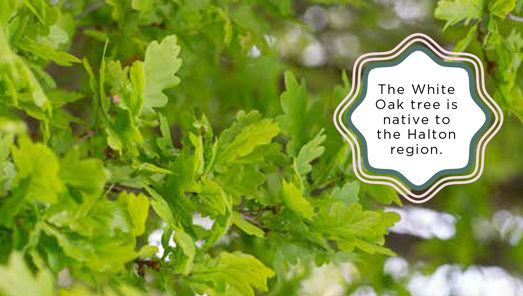
White Oak, an adaptable tree with deep roots and a purple-red leaf.

Northern Spicebush, a bright, cheerful and fast-growing shrub for shady areas that features dense clusters of tiny, pale yellow flowers loved by swallowtail butterflies.

Black Elderberry, a shrub with large, creamy-white flowers that produce dark purple berries loved by birds. 

Grow Pollinator-Friendly Plants 

A sustainable garden attracts and provides food and habitats for various pollinators like bees, butterflies, and birds. “Planting a pollinator garden not only beautifies yards and urban parks, it also fights climate change and increases biodiversity,” says Tichkova. 

Pollinator-friendly plants often require fewer pesticides and fertilizers, promoting a more environmentally friendly gardening approach. Consider planting Black Eyed Susan, bee balm, butterfly milkweed, foxglove beardtongue, spotted bee balm, and pale purple coneflower.

Delay Spring Cleanup 

Fallen leaves and other so-called garden “waste” serve an important function, lowering the soil’s temperature, retaining moisture and providing shelter for native pollinators and insects. “Many conventional gardens are kept ‘tidy’,” says Classen, referring to the practice of removing debris as soon as temperatures hover in the double digits. “Ironically we then often replace this protective layer of leaf litter and other debris with store bought manufactured mulches.”

Participate in “No-Mow May” 

The No Mow May movement encourages people to refrain from mowing lawns at this critical time for hungry bees emerging from hibernation. Nature doesn’t offer them much food in May, so instead of cutting your grass, allow it to grow longer and let the flowers bloom to provide nectar and pollen. 

Besides hindering biodiversity, mowing contributes to air and noise pollution and greenhouse gas emissions from lawn mowers and gas powered machinery such as leaf blowers. Delaying mowing until June can help decrease these environmental impacts and really make a difference. 


When Bert Jackson opened the doors of Way Cool Tattoos 24 years ago in Oakville, his parents were dead set against it. Back then, tattoos belonged to the realm of misfits and rebels, not to their private-school-educated son. 

Fast forward to today and tattoos, once a symbol of rebellion against the mainstream, have become, well, mainstream. 

“I’ve become a respectable member of the community!” Bert says, sounding almost surprised. “You’d be amazed how many parents come in here giving consent for their 16- or 17-year-old kids.” Some have even gone under the needle themselves. “We had a mother and daughter get matching flowers. It was something really meaningful to them and it was really sweet to see.”

Bert credits reality TV shows like Ink Masters and Miami Ink for changing people’s perceptions of body art. Suddenly, tattoo parlours weren’t intimidating dens of ink and needles for those on the fringe but places of creative self-expression for people from all walks of life. “People who didn’t know much about tattoos were seeing heart-warming stories of people getting tattoos, like someone wanting to commemorate their deceased grandfather. And they’re thinking ‘what a nice way to celebrate them. And oh, I lost somebody in my life, maybe I’ll get a tattoo.’”

Perhaps the real MVP is social media. Every selfie became an opportunity for celebrities to flaunt their fresh ink as a statement of style, and was more likely to attract Instagram likes these days than raised eyebrows. 

“If Rihanna has a new tattoo, then all the girls will come in and get it. It’s the same thing for basketball players,” he says. A wide cross-section of clients visits his studio. They include young and returning customers, but also nurses, firefighters, police officers and teachers alike seeking out his expertise. He’s skilled in many disciplines, including traditional Japanese art and realistic animal designs. 

“Things have really changed since I got my first tattoo in my early 20s.” And so has his life. He grew up in Toronto and was “very much an urban kind of dude” when he got a Buddhist motif inked on his chest, representing the root causes of human suffering. Since then, he’s had a family and moved to Oakville, which promised a healthier lifestyle and more nature. Oh, and that first tattoo? It now sits among an ever-expanding ink collection adorning his body. 

Becoming a tattoo master was a natural fit since he was, and still is, a visual artist. His home is covered with vibrant-coloured paintings and eclectic sculptures he made for shows held in Toronto galleries. One notable piece, a bronze sculpture of a hammerhead shark, commemorates the death of Rob Stewart, the Canadian activist and director of films like Sharkwater. Another, an aluminum-cast sculpture of Donald Trump’s head on the body of a menacing octopus, serves as Bert’s social commentary on the former president. “I made three of them pairing Trump’s head with an animal I thought said something about him as a person. There’s one at the tattoo shop,” he says, taking a pause and smirking before he continues. “It’s a pig.”

At Way Cool Tattoos, Bert encourages his team of five tattooists to display their artwork as well, and fosters a friendly, creative atmosphere that’s more akin to a hair salon than the stereotypical surly tattoo parlours of the nineties. “We try to be disarming,” he explains, emphasizing the collaborative nature of the tattooing process with clients. “I love the creativity involved and that I’m able to express myself. But you know, what I really like about tattooing is the social aspect,” Bert adds. “People come to me with ideas that I never would have thought of. Not only do you have a lot of interesting projects, but you also meet a lot of interesting people.”

The studio has been located in the Kerr Village for so long – it’s the oldest tattoo shop in Oakville – that he’s known as “the tattoo guy.” Even his parents, albeit still opposed to tattoos, have accepted his line of work. “I guess they’re like, ‘if you can’t beat ‘em, join ‘em.’” 

LOCAL LINKS

Way Cool Tattoos
494 Kerr Street, Oakville
Waycooloakville.com

Good Point Tattoos
136 Trafalgar Road, Oakville
Gptattoos.com

The Golden Pearl Tattoo
77 Lakeshore Road West, Oakville
Thegoldenpearl.ca

Zen Tattoo Studio
2342 Lakeshore Road West, Oakville
Zentattoostudio.com

Lionheart Tattoo
5048 Fairview Street, Burlington
Lionhearttattoo.ca

Painted People Tattoo Company
472 Elizabeth Street, Burlington
Paintedpeopletattoos.ca


Are you familiar with a song by Bette Midler called, “Friends”? It came out in 1972, so if you were born long after bell bottoms were cool (the first time), let me fill you in. The chorus went, “You gotta have… friehhhhhh-ends.” According to the song, Bette had friends, but “somethin’ came and snatched them away.” Yikes. Would love a little back story on that. She sang, “I’ll wait for new friends to come at dawn. I don’t care if I’m hungry or freezin’ cold. I’m gonna get me some of them.” Bette wasn’t playing around when it came to friendship.

Even though she didn’t explain why she was so adamant about making friends, she was right to sing the praises of friendship. 

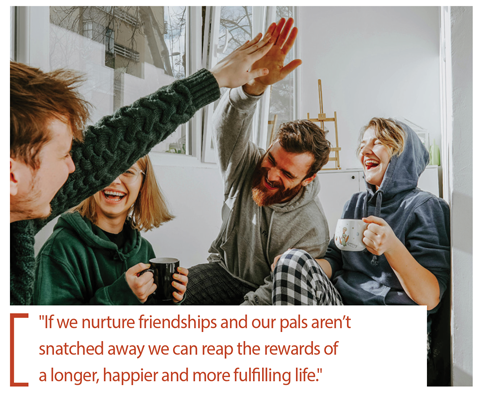
Scientific evidence overwhelmingly supports the notion that humans are inherently social creatures who benefit greatly from having friends. From improved brain health and stress reduction to enhanced emotional well-being and physical health, the positive effects of social connection on our lives are undeniable. If we nurture friendships and our pals aren’t snatched away (poor Bette), we can reap the rewards of a longer, happier and more fulfilling life.


However, making friends as adults is tricky. Gone are the days of bonding over shared classes or playground antics. Now, we’re left to navigate the awkward waters of social interaction armed with nothing but our wits and maybe a few icebreakers. Add in the complexities of adulthood – careers, families, and so many commitments, and it’s no wonder we often feel a little isolated. 

The first step in building your adult friend group is recognizing the importance of companionship. Friends aren’t just for giggles and gossip; they’re a crucial support system, helping us navigate life’s ups and downs with a little less stress and a lot more laughter. 

So how do you actually go about making friends as a grownup? Well, it’s about finding common ground – quite literally, in some cases. Remember those hobbies you used to love before life got in the way? Dust off that tennis racket, dig out those watercolour paints or lace up those running shoes because joining a club or group centred around your interests is a surefire way to meet like-minded individuals.

Here are a few suggestions to help you seek out those new friends:

1. Pickleball
If you’re looking for a fun and fast-paced way to make new friends, hit your local pickleball court. This hybrid of tennis, badminton and ping pong is all the rage among adults looking to stay active and socialize. 

2. Get Out There
Join a local running/hiking/cycling group. Whether you’re a seasoned runner or new to hiking, there’s a group out there waiting to welcome you with open arms (and sweaty high fives). 

3. Crafty Crew
Check out a crafting class or workshop in your area. From pottery and woodworking to painting to knitting, there’s bound to be a group of creative souls just waiting to bond over their shared love of all things handmade.

4. Book Lovers
Joining a book club is a fantastic way to meet fellow bookworms and engage in lively discussions about your favourite novels. 

5. Cooking
If you take a cooking class, not only will you pick up some new culinary skills, but you’ll also have the opportunity to bond with fellow foodies.

6. Volunteer
Giving back not only feels good, but it’s also a great way to meet new people. 

Making friends as a grown-up may not always be easy, but the rewards far outweigh the challenges. So put yourself out there, embrace your interests, and watch as your social circle blossoms before your eyes. After all, you gotta have friends. (Sorry, that sounds bossy. And I’m having trouble with the bad grammar). You don’t “gotta” have friends, but life is sure sweeter when you do. 

 Studies have shown… 

1. Brain health: Social interaction stimulates the brain and may help reduce the risk of cognitive decline as we age. 

2. Stress reduction: Spending time with friends can lower levels of cortisol, the body’s primary stress hormone. 

3. Emotional well-being: Social support provides a sense of belonging, validation and emotional security, which are essential for maintaining mental health.

4. Physical health: Socially connected people tend to adopt healthier lifestyle habits, such as regular exercise and better nutrition, which contribute to overall longevity.

5. Longevity: Having close friendships provides a sense of purpose, meaning and fulfillment, all of which contribute to a longer and happier life.

LOCAL LINKS – ACTIVITIES AND CLUBS

Crackpot Studios
Adult 10-week pottery sessions
crackpotstudio.com

My Pop Choir
Adult community choir
mypopchoir.com

Pickleheads
Source for pickleball courts across Canada
pickleheads.com

Oakville Public Library
Monthly adult book club
opl.ca

Burloak Canoe Club
Dragon Boat spring sessions
burloakcanoeclub.com

Halton Outdoor Club
Planned outdoor activities
haltonoutdoorclub.ca

The Running Room
Free weekly run club
runningroom.com/ca


When I announced my intention to quit drinking alcohol in 2018, reactions from friends and family ranged from disbelief to disappointment. Sure, I drank wine most nights and suffered a periodic two-day hangover, but they wondered why I had to shun spirits completely. My motivation to boost my health and silence the nightly debate in my head over to drink or not to drink seemed dubious. Many of my wine-drinking friends were downright alarmed to be losing one of their own to a sobriety movement that, at the time, was barely a crawl. In short, it took tremendous effort, and little outside support, to stick to my commitment. 

Today, the zero-alcohol lifestyle has seeped into the mainstream in ways I could never have imagined in 2018. Going dry is much easier to swallow thanks to a marketplace saturated with booze-free beverages and a growing chorus of teetotalers singing the praises of sobriety. 

The trend likely got its biggest boost when new research indicated that the ideal amount of alcohol was, in fact, zero. In January 2023, the World Health Organization stated, “there is no safe amount that does not affect health.” And to the chagrin of beer guzzlers and wine aficionados everywhere, Canada updated its guidelines on alcohol consumption to a maximum of two drinks per week – a small fraction of its previous limit of 15 drinks for men and 10 for women. 

But are Canadians actually drinking less? The evidence points to yes. According to Statistics Canada, national sales of alcohol declined by 1.2 per cent in 2021/22 – the first decline since 2013/14 and the largest drop in over a decade.

Chantal Ingram, owner of downtown Oakville’s cocktail and entertaining supply shop, Flourish and Bask, has noticed the change. “My shop was open for ‘Dry January’ in 2022, and alcohol-free was still a new market for Canadians. There was still a stigma to not drinking,” she says. “Dry January 2024 was a much bigger deal. Not only did the media take hold of the topic, the market blew up. Customers this year were much better informed. They’d done their research and came into the shop knowing brands.” 

If you’re considering ditching the drink, there’s no need to wait until January. Whether you’re planning a dry month or permanent sobriety or simply want to cut back on your alcohol consumption, here are some tips to help you stick to your commitment this spring.  

Soak in the experience, not the buzz

I had been an enthusiastic wine drinker when I quit drinking. To resist the temptation to uncork, I leaned into the parts of the experience that were not off-limits, such as drinking from a wine glass. I swapped Sauvignon Blanc for bubbly alternatives (think: kombucha or flavoured sparkling water), and continue the habit even today. The proliferation of alcohol-free beers and wines make it even easier. Believe it, or not, the desire for the buzz wears off over time.  

Adjust your taste buds

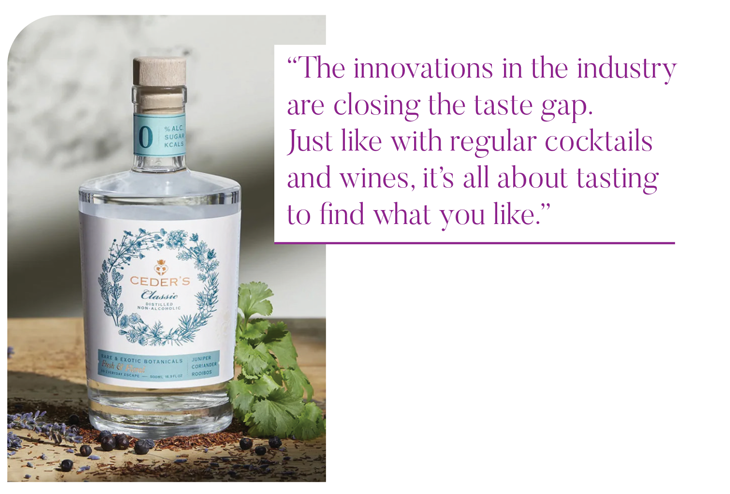
Keep an open mind when switching to the zero-alcohol options. “Alcohol-free beverages can have a bit of a learning curve. You need to understand that many of them are not 100 per cent replicas of your favourites, but they’re awfully close,” says Ingram. “The innovations in the industry are closing the taste gap. Just like with regular cocktails and wines, it’s all about tasting to find what you like.” 

Go fresh and healthy

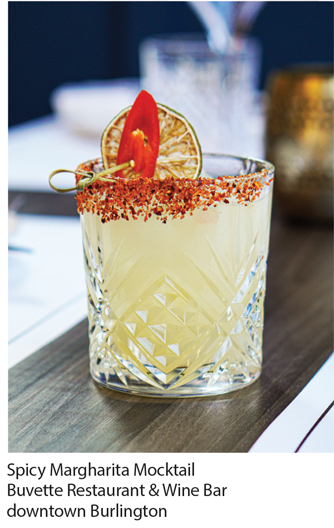
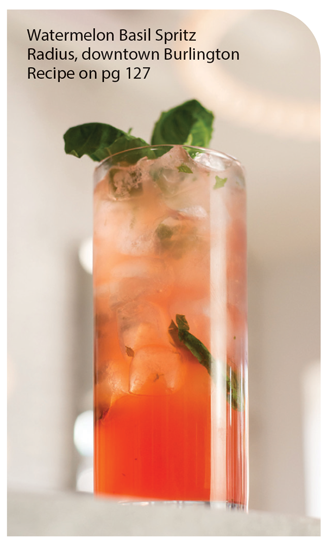
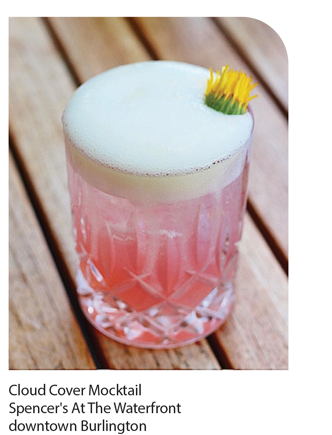
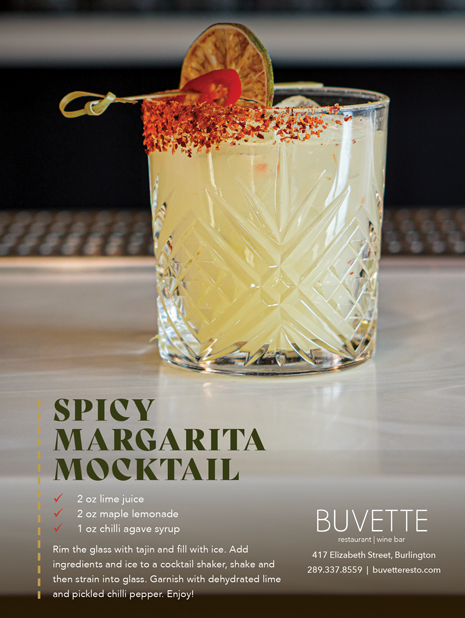
While the spirit tends to be the star ingredient in a cocktail, mocktails invite you to get more creative. Rethink the cocktail completely and ditch the high sugar sodas in favour of natural ingredients to create healthier concoctions. Take inspiration from the many restaurants now catering to the sober crowd with zero proof elixirs featuring fresh fruit and herbs.

Focus on the gains

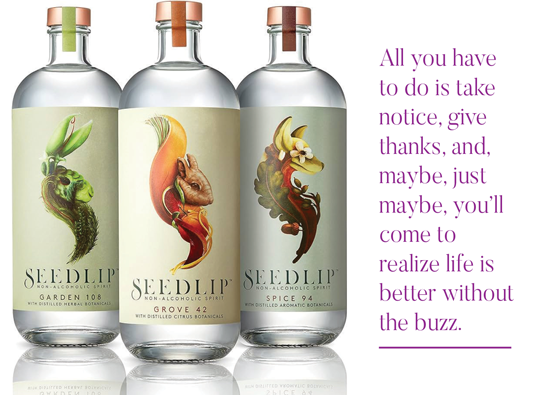
Giving anything up can feel like a sacrifice, but it doesn’t have to be that way. Yes, you’re giving up shooters with friends tonight, but while they’re waking with pounding heads, you’ll be halfway through your morning workout and hitting IG with a #soberissexy selfie. In fact, the longer I went without alcohol, the greater the benefits, from a clearer complexion to a sharper mind, greater productivity to a happier outlook. It doesn’t take much to realize the gains outweigh the losses. All you have to do is take notice, give thanks, and, maybe, just maybe, you’ll come to realize life is better without
the buzz. 

There are few things more welcoming in spring than waking up to sunny skies after a long, dark Canadian winter. But as the sun peeks through your window ever earlier, you’d be forgiven for wishing you had darker shades to catch a few extra ZZZZZs. It’s one of many reasons you may consider updating the window coverings in your home. Snooze strategies aside, the right window covering can refresh a room’s decor, offer privacy and help manage a home’s temperature. 

“Window coverings are instantly noticeable in a room,” says Sarah Love of PM Wyre in Burlington. “Older curtains and blinds can make homes look dated and old-fashioned. New window coverings can modernize a more traditional home or soften the look of a modern home.” 

If you’re in the market to replace those circa 1980s vertical blinds, there are plenty of styles and automation options to match your personal taste. When selecting the right window covering, Love suggests that several factors

should be taken into account, including light control, privacy, room function, desired aesthetic and energy efficiency.

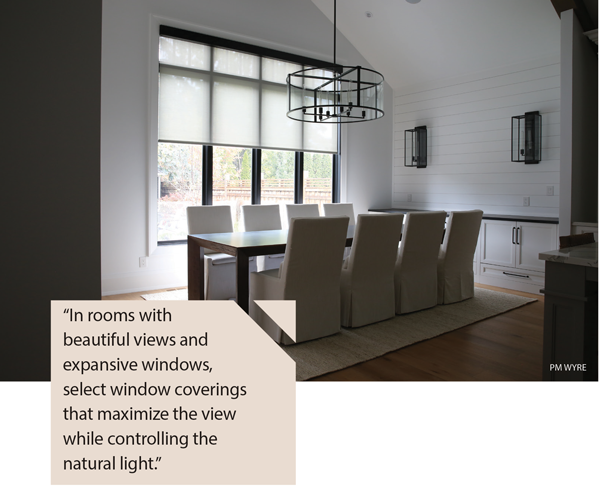
“In rooms with beautiful views and expansive windows, select window coverings that maximize the view while controlling the natural light,” says Love. If it’s for a bathroom, privacy takes precedence and blinds should be made of materials that can handle the room’s extra moisture and heat, advises Love.  

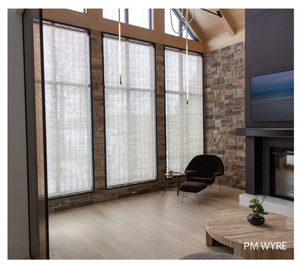
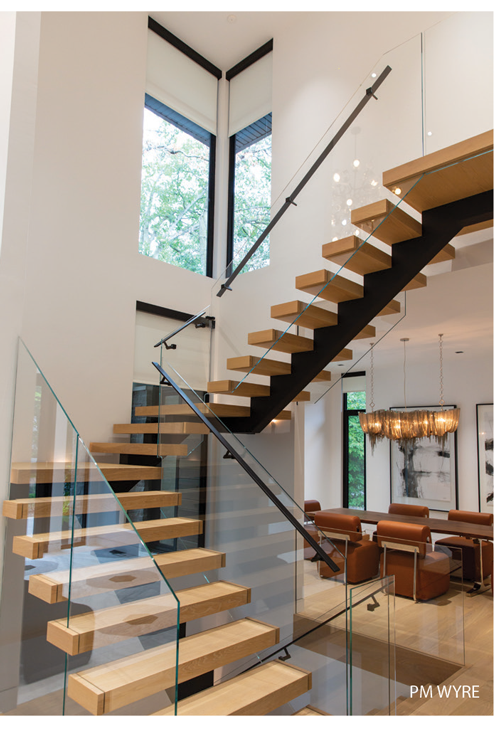
Today’s trends lean toward automated roller shades in lieu of those dated vertical blinds – once the go-to solution for condominiums and patio doors. While there are hundreds of fabrics to choose from, materials made with natural fibres and organic textures, as well as neutral colours are most popular, according to Love. 

Remember those strings and chains to adjust your blinds? Today’s automation does away with them, making today’s window covering easier to use, safer for kids and in tune with your home’s lighting and climate needs. Just about any window covering can be automated, says Love. “We can set them on a schedule based on the sun’s position, and then forget about them. They’re just always in the right position!”

Window coverings are an important investment in your home that can last many years, so relying on a professional for guidance is key. Love finds it best to visit the client’s space in order to determine their needs and the technical aspects of the installation. 

With the return of warm sunny days, now may be an ideal time to revisit your blinds and curtains. The right window coverings are an easy way to refresh your space and help optimize the comfort in your home.  


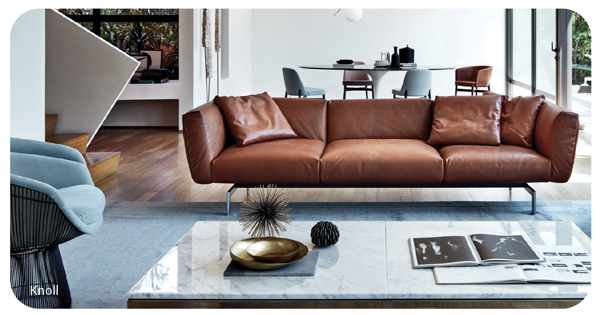
Originating in the post-World War II era, spanning from around the 1940s to the 1960s, the mid-century modern design movement embraced simplicity, clean lines and functional elegance. This timeless aesthetic continues to influence modern interior design today.

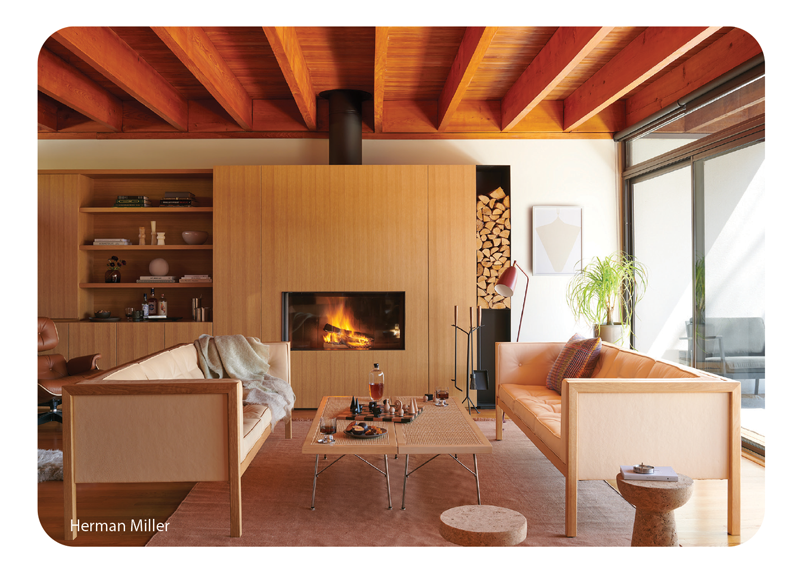
Mid-century modern design is defined by clear straight lines and gentle curves. This style embraces minimalism, avoiding excessive ornamentation or clutter and blends a variety of materials including wood, metal, glass and plastic to create visual interest and add texture. 

“One of my favourite things that defines mid-century design is its integration with nature,” says Shawnna Truelove, Principal Designer/Owner of Truelove Designs. “Large windows and open floor plans are common in mid-century architecture, allowing for a seamless connection between indoor and outdoor spaces.”

Mid-century modern is a design that can complement many other styles, making it an aesthetic that continues to be popular today. “The simple details and organic shapes appeal to a lot of people,” says Ashley Bonello, who co-owns Rume Design Inc. with Michelène Segodnia. She says many modern furniture companies have incorporated mid-century modern in their designs.   

“It’s one of those that can complement so many other styles,” says Truelove. “If you like modern, Art Deco, even traditional, you can  seamlessly mix some mid-century in there, resulting in a space that will appeal to a wide range of tastes and preferences,” she says.

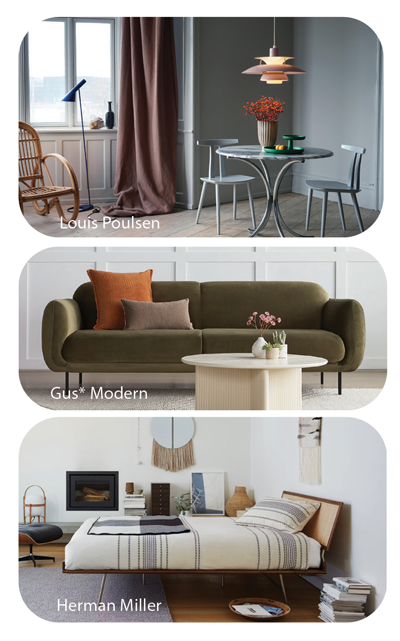
While mid-century modern maintains its core principles, it has evolved to reflect changing tastes, lifestyles and advancements in design and technology, such as using reclaimed wood, recycled metals and eco-friendly upholstery fabrics in response to the trend in sustainability. While traditional mid-century furniture was known for incorporating bold, vibrant hues such as mustard yellow, burnt orange and avocado green, Truelove says the style has adapted to incorporate more muted hues, pastels and neutral tones, to match the latest trends in home design.

Incorporate Mid-century Modern into Your Home

To bring the timeless elegance of mid-century modern design into your home, consider these tips:

Furniture Selection: Look for pieces with clean lines, such as a statement lounge chair or minimalist dining table. The one staple mid-century piece of furniture Truelove and Segodnia agree can make or break a space is an accent chair. Iconic mid-century modern chairs such as the Eames Lounge Chair or Arne Jacobsen’s Egg Chair are great options. “Look for chairs with organic shapes, tapered legs, and upholstery in bold colours or textured fabrics like tweed or leather,” says Truelove. “No matter what style you’re trying to accomplish in your home, a good mid-century chair can bring lots of character and might just be the wow piece your design is looking for,” she says.

Layer Textures: Layering materials and textures can add contrast, depth and visual interest. “Layering of fabrics, jutes, linens and faux leathers all sustainably sourced are great ways to incorporate (mid-century modern design),” says Segodnia. 

Natural Elements: Incorporate natural materials such as wood, leather and stone to add warmth and texture to your space. Plants are another great way to bring nature indoors. “Add indoor plants in sleek, minimalist planters made of materials like ceramic, fibreglass or metal,” suggests Truelove.  

Minimalist Decor: Keep decor minimal and purposeful, showcasing a few statement art pieces, geometric rugs and iconic lighting fixtures. “Don’t be afraid of colour, especially in art,” says Bonello. “Bold, dramatic art is classic when we design mid-century style.” When adding decor pieces, Truelove advises being selective to stick with the minimalist appeal of the design style, choosing decor pieces with clean lines. “Sculptural figurines featuring abstract or geometric forms are reminiscent of mid-century design aesthetics,” she says. 

Lighting: “I call it the jewelry of the home,” says Truelove, when talking about lighting. Look for pendant lights or floor lamps with clean lines and geometric shapes, such as globe or cone shapes. “Sputnik chandeliers are also a classic mid-century modern lighting option, featuring a burst of metal rods reminiscent of a satellite,” says Truelove.

By infusing your home with mid-century modern design elements, you can create a space that celebrates the timeless elegance and functionality of this iconic design era. 

WHERE TO SHOP

Filter
271 Ottawa St North, Hamilton
filter.design

Joshua Creek Furniture
1029 Speers Road, Oakville
joshuacreekfurniture.com

Anderson’s Interiors
686 Guelph Line, Burlington
andersonsinteriors.ca

Elizabeth Interiors
3225 Fairview Street, Burlington
elizabethinteriors.com

Bungalo Beach
297 Dundas St East, Waterdown
bungalobeach.ca

Oakville resident Marc Fitkin grew up watching 2001 Space Odyssey and being fascinated by the night sky. By the time he got his first department store telescope at the age of 12, he was hooked on astronomy. 

In 2018, Fitkin and his wife, Karen, moved to Oakville and one evening, Fitkin decided to set up one of his telescopes at Bronte Heritage Park. He invited passersby to peek through and get a glimpse at the night sky. “The public seemed to enjoy it,” says Fitkin. “The crowds were getting bigger. Then COVID hit and that was the end of it.” 

Throughout the COVID lockdown, Fitkin couldn’t allow other people to look through his telescope, but he wanted to share what he could see in the night sky and began posting photos from his telescope on a Facebook group called Bronte Neighbours Helping Bronte Neighbours.  

Interest in his photos grew, prompting Fitkin to form his own Facebook Group called The Bronte Astronomer. In August 2022, he returned to Bronte Heritage Park with his telescopes, hosting astronomy events that, he says, are an adaptation of the popular practice of sidewalk astronomy. 

Sidewalk astronomy, also called street corner astronomy, operates on a straightforward principle: to educate the public about the universe by peering through telescopes. This grassroots approach to stargazing has taken different forms over the years. Astronomer John Dobson, inventor of the Dobsonian telescope, is said to have pioneered the practice in the 1960s when he assembled telescopes on urban street corners, inviting the public to view the night sky. “His famous words are ‘just come look at the moon’,” says Fitkin. 

This is exactly what you hear Fitkin and other volunteers saying at Bronte Heritage Park. “We’ll say to people, hey, do you want to see the moon? Do you want to see the rings of Saturn? Do you want to see Jupiter?” he says. Passersby are often so amazed at what they’re seeing, some even think they’re being tricked. “They’ll say oh, you have a picture in there and we’re like no, no, that’s real,” laughs Fitkin. 

While Dobson’s version of sidewalk astronomy saw astronomers spontaneously setting up telescopes on various urban street corners, continually moving around cities, Fitkin and his volunteers have reimagined the concept, creating a regular gathering at Oakville’s  

Bronte Heritage Park. Through The Bronte Astronomer Facebook page, Fitkin notifies its 2,000-plus followers about upcoming events. Interest in these stargazing events has grown over the past two years. “We’re getting close to 200, 300 people some nights,” says Fitkin.

Fitkin’s vision is inclusive and accessible. With a goal of hosting at least one event per month, he extends an open invitation to anyone curious about astronomy. “It’s astronomy for everyone — kids, adults, anyone with an interest,” Fitkin emphasizes. Volunteers, armed with their telescopic expertise, offer guidance and insights, fostering a welcoming environment for novices and enthusiasts alike.

Fitkin and fellow volunteers set up their own telescopes, sometimes amassing over a dozen telescopes. Frequently amateur astronomers will bring their own telescopes to the events to ask volunteers for pointers on how to use them. Fitkin often brings an electronically assisted telescope that projects celestial objects onto a screen for easy viewing. “It makes it easy for public viewing so you don’t have a bunch of people trying to look through the telescope,” he says. 

Engagement is key during these events. Passersby are encouraged to ask questions about what they’re seeing through the lens — even asking questions as simple as what exactly is a star — sparking discussions about the mysteries of the night sky. Fitkin notes that volunteers are always eager to demystify astronomy, addressing queries about stars, planets and beyond. 

“The goal is to educate others and advance the public’s understanding of astronomy,” Fitkin affirms, while also dispelling the misconception that urban environments hinder stargazing. “People often think because we live in an urban environment that we can’t see anything and we tell them that’s not really true. Here’s what you can see.” 


At Look Local, we are honoured to work every day with small business owners and entrepreneurs in our community.  We know that the people behind these businesses have taken risks and made sacrifices to follow a dream and their passion.  Their stories are interesting and inspiring and we wanted to share them with you, our readers.  We hope you enjoy the first few profiles in this issue.  We plan to make this a regular feature in Look Local, so look out for additional small business stories in the future!